Fashion Week lessons for adland
February 24, 2026
What advertisers and brands can learn about creating memorable brand experiences and tapping into culture with fashion’s front row.
Another February, another Fashion Month. As the hype passes from one major city to another, the continued buzz of February’s fashion weeks is proof that the runway has never lost its allure. It remains a prime signifier of the value of experiential, and, increasingly, a strong proof point for the branding superpower of the influencer. The world of Fashion Week is not as far away as it may seem from adland. There is much to be learnt from the marketing success of these shows, and marketers would do well to pay attention to what works and why.
The fashion show experience
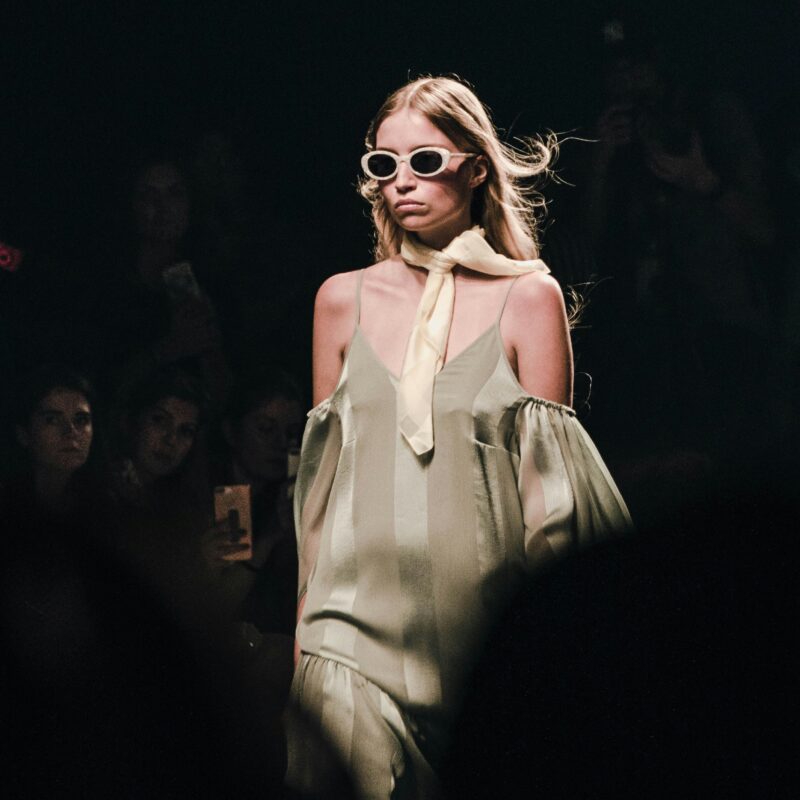
A key part of the appeal of fashion week is still in the physical experience: from the first sight of a collection to the exclusivity of being present. Being one of the few in the room to view the show in its entirety – the music, the layout, the atmosphere – is an incredibly powerful, immersive experience. It is a high-value occasion where a brand can bring its audience into its world in full.
There have been some unforgettable examples of such world-building. At this London Fashion Week, Lucila Safide presented her AW26 collection via a tableaux vivant, telling the story of a debutant who doesn’t want to be at a ball, in a classic ballroom setting. In the past, we’ve seen the immersive world of Coperni’s SS25 show at Disneyland Paris, where models walked out to the backdrop of Disney’s infamous castle and booming fireworks. Balenciaga’s use of weather and environment was particularly memorable with FW22 presented by models battling an artificial blizzard and SS23 set on a mudscape. Then there was the music at Margiela’s SS26 show created by an orchestra of children, which was as audibly bad as it was emotionally endearing.
All are instances of shows creating atmospheres, engulfing the audience into the designer’s creative vision. This vision often begins before the show starts. Marketing sets the stage ahead of time, extending the audience’s experience and creating a consistent thread. For Jonathon Anderson’s debut Dior show, SS26, he sent out invitations in the form of porcelain plates. Anderson pulled the idea for the plate invitations from Dior’s archives, establishing his vision for the house – embracing its history as he moved it forward – before the collection was even seen. Not only did this set the tone for his first show, but it also brought attendees into his vision early, before the first model hit the runway.
Tapping into culture with celebrities and influencers
With even more influencers and celebrities flocking to shows, the catwalk itself is still key, but eyes now flit between the models and the front row. So much so, that Vogue has been running a series tracking all the celebrities and stars on show front rows. The purpose is two-pronged: to exhibit new collections and to gain cultural access by association.
Celebrity and influencer appearances at these events strengthen a label’s branding by saying “this is who we are”, without having to say anything. Like Charli XCX sitting front row at Yves Saint Laurent’s SS26 show, with a backdrop of the Eiffel Tower. Or, Quen Blackwell – a content creator turned actor – at Coach AW26 with famed Gen Z actress, Odessa A’zion. Sitting together, the pair created social media buzz, which then platformed Coach’s show.
This move also brings in cohorts of fans who view the show through social media, either via live streams or through the creators they follow. As a result, the brand can retain the exclusivity of its physical show, while gaining exposure to engaged audiences that feel authentic to their algorithm. It’s this latter point that is really important for infiltrating the zeitgeist. Through social media content, these shows are fed into the mainstream, making their way into discussions, trends and, if you’re lucky, culture.
Fashion Week lessons for marketers
As we reach the halfway point of another February Fashion Month, there are two standout lessons for adland when it comes to experiences and branding.
- Lesson one: experiences are powerful tools for world-building and brand memorability; make them count. Extend your brand story outside the obvious paths and channels, surprise and delight your audience with moments that are both unique and creatively consistent with your marketing.
- Lesson two: embrace the idea of the “front row”, brand ambassadors that not only extend and solidify your branding, but also bring in engaged audiences. Do this by associating with the influencers and celebrities who help to show who you are. These choices might not always be the most obvious (think Willem Dafoe walking Miu Miu’s SS25 runway).
The world of high fashion is not too dissimilar. Aside from the collections, there are aspirational parallels in brand worldbuilding, memorability and infiltrating, or even contributing to, culture. Brands should learn from Fashion Month in how to be clever, strategic, creative, and most importantly, know who they are.
By Jeevan Hammond